
Columbia Law Faculty on 2026 Supreme Court Decisions

Law School faculty and legal experts offer insights into the high court's rulings from this term.
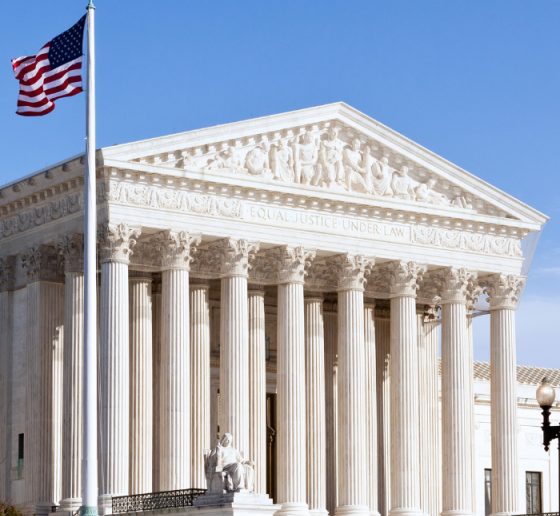
The exterior of the Supreme Court Building. An American flag waves in the air to the right of the building.

As the U.S. Supreme Court issued pivotal rulings on questions ranging from the future of independent federal agencies to birthright citizenship, Columbia Law School faculty shared context and analysis with media outlets and reporters across the country. Explore a selection of commentary and insights featuring Law School experts on cases (listed in reverse chronological order of the decision) from October Term 2025.
 

The exterior of the U.S. Supreme Court

Court Rejects Challenge to Birthright Citizenship

Trump v. Barbara

Elora Mukherjee, Jerome L. Greene Clinical Professor of Law and Director of the Immigrants’ Rights Clinic

Immigrants’ Rights Clinic Director Talks Birthright Citizenship Ruling,” Spectrum News NY1
“Today’s Supreme Court ruling is a stunning rebuke to President Trump. …  The Supreme Court’s majority opinion makes very clear that the 14th Amendment’s text and history protects all babies born on U.S. soil and guarantees U.S. citizenship to all of them.” 

What the Supreme Court Ruling Means for Birthright Citizenship and Legal Challenges,” ABC News
“This decision is not the end of the Trump administration’s mass deportation agenda. … This is just one win in a Supreme Court term that has been very hard for immigrant families.” 

The exterior of the U.S. Supreme Court

State Bans on Transgender Athletes Upheld

West Virginia v. B.P.J. and Little v. Hecox

Suzanne Goldberg, Herbert and Doris Wechsler Clinical Professor of Law

The Supreme Court’s Ruling on Trans Athletes Is Legal Scapegoating,” MS NOW
“These bans are about far more than athletics. In this moment, a campaign against transgender people in the United States has produced hundreds of anti-transgender laws and policies across the nation. … Taken together, these laws convey that transgender people are a threat to public safety, education and national security—and that government must act to contain them.”

Rulings on Women’s Sports Cap a Year of Setbacks for Transgender Advocates,” The Washington Post
“These cases involve real people who are suffering or being actively harmed by laws that seem to be unconstitutional or otherwise invalid. I think sometimes that gets lost in the discussion of strategy and whether the movement is moving too quickly or not quickly enough.”

The exterior of the U.S. Supreme Court

Presidential Power Over Independent Agencies Expanded With a Federal Reserve Exception

Trump v. Cook and Trump v. Slaughter

John C. Coffee Jr., Adolf A. Berle Professor of Law

For Crucial Federal Agencies, the Veneer of Independence Is Stripped Away,” Los Angeles Times
The Slaughter decision will lead to “a loss of credibility for the SEC. The lobbyists will redouble their attacks, and money will dominate good arguments in their approach. It is likely to become a much more politicized agency that has less interest in hiring independent professionals.”


Philip Hamburger, Maurice & Hilda Friedman Professor of Law

A President With More Control but Less Power,” The Atlantic
“The decision lays the foundation for a repudiation of administrative power and a restoration of the separation of powers. When that happens, presidential power will be confined to executive power. The president will have more control over less.”

What Is the Supreme Court Doing to Presidential Power?” The New York Times
“The court is on firm legal ground. The Constitution elaborately restricts the president’s appointment power but says nothing about dismissing executive branch officials. It follows that the president’s executive power to dismiss subordinates is constitutionally unqualified. This makes sense, for without the ability to fire wayward subordinates, the president’s executive power would be illusory.”


Kathryn Judge, Harvey J. Goldschmid Professor of Law

Cook Stays at Fed but Trump Wins Power Over Other Agencies,” Bloomberg
“It’s good news but not great news for Federal Reserve independence. It does create questions going forward over how sustainable that independence will be.”


Lina Khan, Associate Professor of Law 

‘Real Descent Into Corruption’: How a Supreme Court Decision Supercharges Trump’s Powers,” MS NOW’s The 11th Hour With Ali Velshi
“It’s very interesting to contrast [the Slaughter decision] with the decision that we saw come out concerning the Federal Reserve. … There’s a real question as to why agencies that are on the front lines of protecting working families are going to be treated [differently] from an agency that is looked to by Wall Street banks, by wealthy interests for financial stability and the stability of the monetary supply.”


Lev Menand, Associate Professor of Law 

Cook Stays at Fed but Trump Wins Power Over Other Agencies,” Bloomberg
The ruling “is about the best outcome that the Federal Reserve and Lisa Cook could have hoped for at this stage of the litigation. But it is not likely to put an end to the president’s efforts to remove Lisa Cook.”


Gillian Metzger ’96, Harlan Fiske Stone Professor of Constitutional Law

SCOTUS Expands Presidential Power,” Bloomberg Law Podcast
“I found Slaughter really disappointing in its reasoning, in its thinness. … One of the things that [the justices who signed the majority opinion] just don’t deal with in any fair way is the historical evidence. … I certainly think the balance of that evidence pretty significantly does favor the idea that there were [a] number of different kinds of controls that were imposed, and that the historical record is not at all that the country had come to agreement that the president had at-will removal power in 1789.”

For Crucial Federal Agencies, the Veneer of Independence Is Stripped Away,” Los Angeles Times
“The president can fire the principal officers heading these agencies at will. That will allow for dramatic swings in policy when administrations of different parties come into office, and seek to undo decisions and policies of prior administrations.”

The exterior of the U.S. Supreme Court

Trump Administration Allowed to Rescind Removal Protections for Haitian and Syrian Migrants

Mullin v. Doe and Trump v. Miot

Elora Mukherjee, Jerome L. Greene Clinical Professor of Law and Director of the Immigrants’ Rights Clinic

This Decision Is a Slap in the Face to Immigrants Who Followed the Law,” The New York Times
“As far-off as it may seem, congressional action is now the only way forward. Any new [temporary protected status] statute should explicitly provide for judicial review of termination decisions, effectively overruling Thursday’s devastating Supreme Court decision.”

The exterior of the U.S. Supreme Court

Hawaii Restrictions on Firearm Possession Struck Down

Wolford v. Lopez

Jeffrey Fagan, Isidor and Seville Sulzbacher Professor of Law

Hawaii Ruling Praised by U.S. Gun Rights Groups—Are More Rollbacks Coming?” The Guardian
“[The Wolford decision] creates an extraordinary burden on private property owners. They’re going to have to take new steps now because the rules about carrying in private property are thrown into question.”

The exterior of the U.S. Supreme Court

Rastafarian Inmate Forcibly Shaved by Prison Guards Cannot Sue

Landor v. Louisiana

Suzanne Goldberg, Herbert and Doris Wechsler Clinical Professor of Law

Justices Block Rastafarian’s Suit Over Forced Head Shaving,” Bloomberg Law
“On the one hand, this case seems to be an about-face from the court’s consistent protection, and even deference, to people bringing religious liberty claims—sometimes at the expense of other anti-discrimination commitments. Here, the court draws a line and bars protection.”

The exterior of the U.S. Supreme Court

Court Limits Enforcement of Plea Deal Appeal Waivers in Cases Involving a ‘Miscarriage of Justice’

Hunter v. United States

Amber Baylor,, Clinical Professor of Law and Director of the Law School’s Criminal Defense Clinic

Plea Deals Get Scrutiny in ‘Hunter,’ but Justices Stay Cautious,” Law360
The tactic of stacking charges against a defendant gives prosecutors “the ability to create [plea] agreements on their own terms and really limit the choice for people who are hoping not to face the extremes of potential sentences after trial.”

The exterior of the U.S. Supreme Court

Louisiana Congressional Map Struck Down, Weakening the Voting Rights Act

Louisiana v. Callais

Kimberlé W. Crenshaw, Isidor and Seville Sulzbacher Professor of Law

‘Backtalker’: Kimberlé Crenshaw on New Memoir, Voting Rights, Critical Race Theory & Clarence Thomas,” Democracy Now!
“Incumbency, particularly in Louisiana, is made and reinforced by packing, cracking, stacking African American voters. What they’re basically saying is you have to take the baseline [congressional map] as is, even though that’s a product of race discrimination. If you try to remedy the racial discrimination that’s built into incumbency, that’s when you’re being racist. That’s the problem. So it’s turning reality completely on its head and destroying the Voting Rights Act while they’re doing so.”


Jamal Greene, Dwight Professor of Law

The Roberts Court Takes a Page from Plessy v. Ferguson,” Mother Jones
The Callais decision is “a hyper judicial supremacist intervention” that harks back to “the worst historical example” of judicial supremacy, the Civil Rights Cases of 1883, which struck down the Civil Rights Act of 1875.


Olatunde Johnson, Ruth Bader Ginsburg ’59 Professor of Law

How to Fix the Supreme Court,” Brennan Center for Justice’s The Briefing Podcast With Michael Waldman
The court “doesn’t squarely hold the Voting Rights Act unconstitutional, but it renders Section 2 of the Voting Rights Act so unusable in the way in which it reads prior precedent, and that is a kind of sleight of hand. … The other thing that really strikes me is just its elevation of partisan gerrymandering and partisan manipulation of elections, almost as if it’s such a good thing.”

The exterior of the U.S. Supreme Court

Colorado Law Banning Conversion Therapy Struck Down

Chiles v. Salazar

Suzanne Goldberg, Herbert and Doris Wechsler Clinical Professor of Law

Conversion Therapy Ban Struck Down,” Bloomberg Law Podcast
“I think we can see that this is part of a broader agenda on the part of legal organizations to find plaintiffs who are willing to make these claims with a goal of pushing the law in a direction that really restricts the kind of legal protections for LGBT people.”

The exterior of the U.S. Supreme Court

Internet Service Providers Not Liable for Subscribers’ Copyright Infringement

Cox Communications Inc. v. Sony Music Entertainment

Shyamkrishna Balganesh, Sol Goldman Professor of Law

Cox SCOTUS Decision,” Bloomberg Law Podcast
“One of the things that’s very glaring in the opinion is how there is an oversimplification of the entire complexity of the doctrine that was present not just in the Supreme Court’s own prior precedents, but [in] the way in which the intermediate courts of appeal had understood those precedents and applied it in case after case. … There’s something institutional going on here where Justice Thomas [who wrote the majority opinion] does not want the courts to continue developing [the doctrine of contributory infringement].” 


Ronald Mann, Albert E. Cinelli Enterprise Professor of Law

Justices Reject Billion-Dollar Judgment for Copyright Infringement by Internet Service Provider,” SCOTUSblog
“The case presents yet another chapter in the decades-long effort by Sony and other content providers to stamp out the pervasively infringing use of their copyrighted works on the internet (mostly music, movies, and television shows). But Justice Clarence Thomas’ brief opinion made it clear that the content providers are not going to get anywhere by suing internet service providers like Cox.”

The exterior of the U.S. Supreme Court

Tariffs Imposed by the Trump Administration Struck Down

Learning Resources v. Trump

Kathryn Judge, Harvey J. Goldschmid Professor of Law

EU Warns That Trump’s New Tariff Policy Breaks Trade Agreement,” Bloomberg Businessweek Daily
“The majority of the court recognized tariffs are a variation of the power to tax. The power to tax is one that the Constitution clearly vests in Congress. … We have a court that is very committed to strong and broad executive power, but that doesn’t mean it’s going to be limitless.”


Associate Professor of Law Lev Menand, Associate Professor of Law, and Joel Michaels, Postdoctoral Research Scholar

Again, Trump Completely Misreads the Law,” The New York Times
President Trump “immediately announced that he was relying on a different statute—the Trade Act of 1974—to impose new, near-universal 10 percent tariffs, which he then raised to 15 percent. These new tariffs are illegal, too. They are just another attempt by the president to ignore the law and dare the courts to stop him.” 

Related News and Stories