Books by Columbia Law Scholars 2025: The Year in Review

Columbia Law School faculty and research scholars explore legal, economic, political, and social issues in books published this year. 
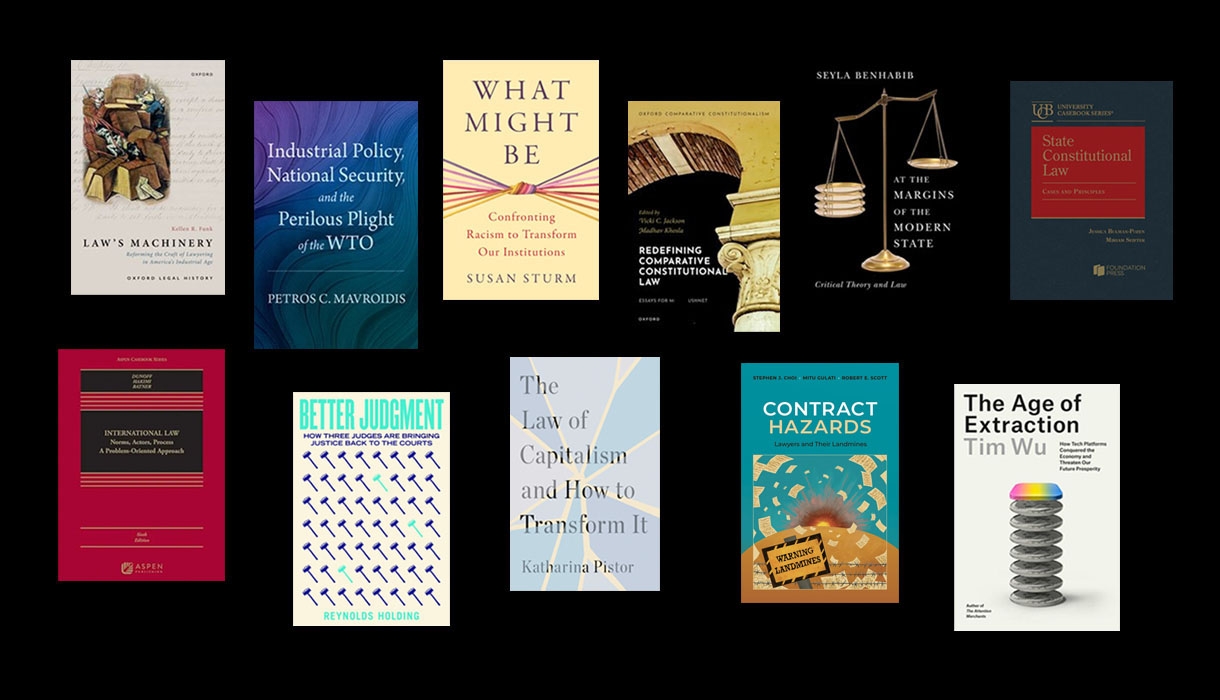
A selection of book covers by Columbia Law faculty

Books published in 2025 by Columbia Law School scholars take on grand-scale topics, including the reform of capitalism, the battle against racism, and the societal struggle with evolving tech platforms.
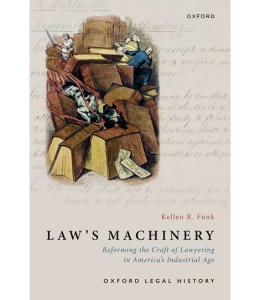

 

Law's Machinery book cover

Kellen R. Funk

Law’s Machinery: Reforming the Craft of Lawyering in America’s Industrial Age
Oxford University Press, January 2025

Kellen R. Funk, Michael E. Patterson Professor of Law, writes the first synthesized history of the United States’ codification of the law during the Industrial Age. Using innovative digital analysis, Funk shows how states borrowed their codes of civil practice from one another. He also describes how New York attorney David Dudley Field and his allies legislated a “code of practice” and ultimately succeeded in turning American law into a machine run by, and in the interests of, professional lawyers like themselves. 

Cover of book by Petros C. Mavroidis

Petros C. Mavroidis

Industrial Policy, National Security, and the Perilous Plight of the WTO
Oxford University Press, January 2025

The World Trade Organization (WTO) is at the epicenter of international trade, national security, and environmental challenges currently facing the global order. Yet the WTO also faces a crisis of distrustful member states invoking trade restrictions in the name of economic security. Petros C. Mavroidis, Edwin B. Parker Professor of Foreign & Comparative Law, argues that, while ensuring the survival of the WTO is crucial for rebuilding the trust of the global trading community, its adjudication branch is insufficiently equipped to address current challenges, and the WTO contract itself is in dire need of updating.  

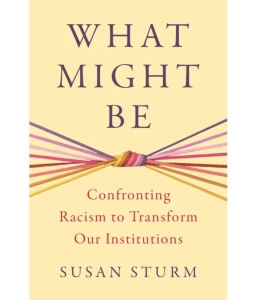
What Might Be book cover

Susan P. Sturm 

What Might Be: Confronting Racism to Transform Our Institutions
Princeton University Press, February 2025

Susan P. Sturm, George M. Jaffin Professor of Law and Social Responsibility, explores how change agents can move beyond anti-racism talk to build an architecture of full participation in predominantly white institutions. She offers strategies and stories to help leaders confronting racism in their communities and others who are working to achieve change. (For more, watch Sturm discuss the timeliness of her new book, and how she hopes it will inspire change agents.)

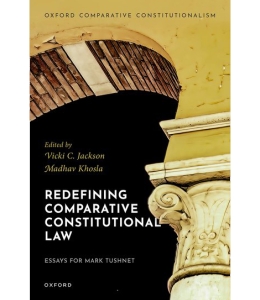
Khosla Book Cover

Madhav Khosla 

Redefining Comparative Constitutional Law: Essays for Mark Tushnet
Oxford University Press, April 2025

This essay collection focuses on variations within liberal constitutionalism and the possibility of other forms of constitutionalism articulated under other political regimes. Edited by Madhav Khosla, Dr. B.R. Ambedkar Professor of Indian Constitutional Law, and Vicki C. Jackson of Harvard Law School, the book honors retired Harvard Law Professor Mark Tushnet. It also includes an essay on “The Possibilities of Constitutional Tourism” by Jamal Greene, Dwight Professor of Law.   

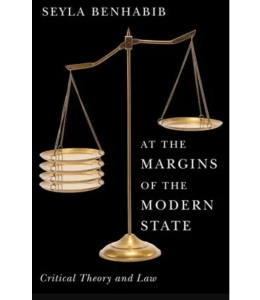
Benabib book cover

Seyla Benhabib 

At the Margins of the Modern State: Critical Theory and Law
Wiley, June 2025

Senior Research Scholar and Adjunct Professor of Law Seyla Benhabib articulates a defense of human rights and universal norms in an age of political skepticism and extremism. She explores the need to rethink core tenets of international law (such as sovereignty, human rights, and territoriality) in the face of challenges like migration, the globalized economy, and climate change. By engaging with postcolonial thinkers, she argues that it is possible to reconstruct the insights of international law to engage in more inclusive world-building.  

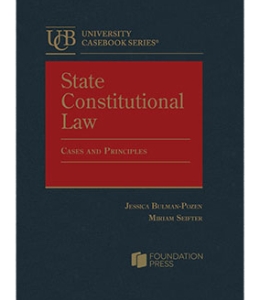
Bulman-Pozen casebook cover

Jessica Bulman-Pozen

State Constitutional Law: Cases and Principles
West Academic, June 2025

In State Constitutional Law: Cases and Principles, Betts Professor of Law Jessica Bulman-Pozen and co-author Miriam Seifter of the University of Wisconsin Law School provide detailed treatments of a wide range of state constitutional issues, including rights, government structure, democracy, fiscal provisions, and intrastate relations. The writers argue that state constitutions differ in important ways from the U.S. Constitution and are worth studying on their own terms, and they explore the role of state constitutions in a federal system.

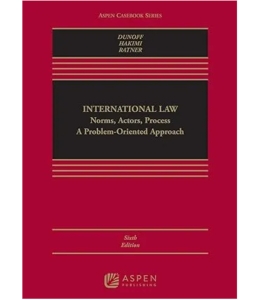
Hakimi casebook cover

Monica Hakimi

International Law: Norms, Actors, Process: A Problem-Oriented Approach, Sixth Edition
Aspen Publishing, June 2025

The updated textbook written by Monica Hakimi, William S. Beinecke Professor of Law, with Jeffrey L. Dunoff of Temple University Beasley School of Law and Steven R. Ratner of the University of Michigan Law School, examines international issues through a problem-based approach. Using real-life case studies as teaching problems, the text explores the processes for making and applying international law with an interdisciplinary approach that goes beyond mere doctrinal explanation. 

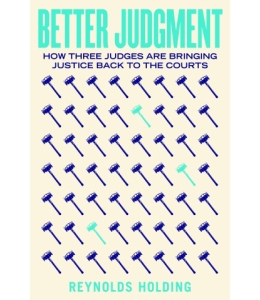
Reynolds Holding book cover

Reynolds Holding 

Better Judgment: How Three Judges Are Bringing Justice Back to the Courts
University of California Press, September 2025

Over the past six decades, the federal courts have been increasingly constrained⎯by Congress, by the executive, and by the Supreme Court. Research Scholar and Editor of The CLS Blue Sky Blog Reynolds Holding tells the stories of three federal judges—Jed Rakoff, Carlton Reeves, and Martha Vázquez—to illustrate how the erosion of federal court power has undermined the constitutional system. Through legal and archival research combined with in-depth interviews, Holding makes the case that judges are good for democracy and should have more power, not less

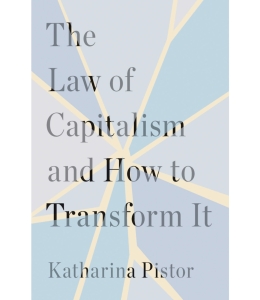
Katharina Pistor book cover

Katharina Pistor

The Law of Capitalism and How to Transform It
Yale University Press, September 2025

While capitalism is conventionally considered an economic system, it is actually a deeply entrenched legal regime, writes Katharina Pistor, Edwin B. Parker Professor of Comparative Law. Pistor explores the ways Western legal systems empower individuals to advance their interests against society and reveals how capitalism—which, she explains, is largely responsible for the erosion of social and political cohesion as well as threats that emanate from climate change—is an unsustainable system designed to foster inequity. The book provides ideas for rethinking how transforming the law and the economy can help lead to a more just system.

Contract Hazards by Robert E. Scott book cover

Robert E. Scott

Contract Hazards: Lawyers and Their Landmines
Oxford University Press, November 2025 

Robert E. Scott, Alfred McCormack Professor Emeritus of Law, examines a paradox in commercial contracts: Standardization of contract language can make production efficient, but it can also result in loopholes—or landmines—that can be used to gain litigation advantage when the transaction collapses. Writing with Stephen J. Choi of New York University School of Law and Mitu Gulati of the University of Virginia School of Law, Scott explores how such flawed terms originate, why they endure, and how they are sometimes exploited by lawyers when deals unravel.

Age of Extraction by Tim Wu book cover

Tim Wu

The Age of Extraction: How Tech Platforms Conquered the Economy and Threaten Our Future Prosperity
Alfred A. Knopf, November 2025

The world is dominated by a handful of tech platforms that provide convenience and entertainment but extract immense amounts of money, data, and attention from users. Tim Wu, Julius Silver Professor of Law, Science and Technology, explores the rise of platform power and the risks and rewards of an internet that promised widespread wealth and democracy only to create new economic classes and aid the spread of autocracy. The book examines the current moment—from generative AI and predictive social data to the anti-monopoly and crypto movements—and envisions a future where technological advances serve the greatest possible good.