Academic Focus: Center for Constitutional Governance
The center focuses on the spaces where democracy thrives, and where it doesn’t.
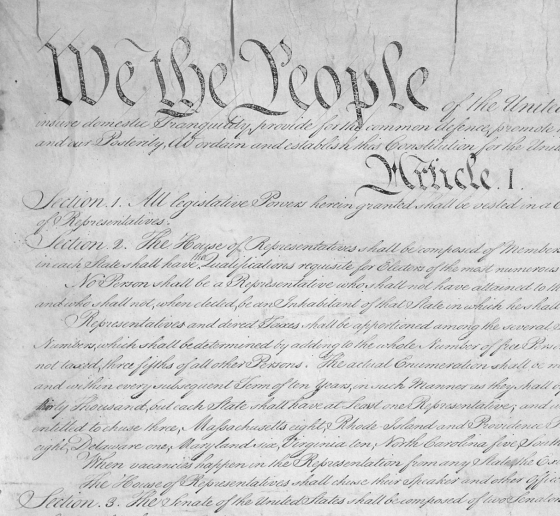
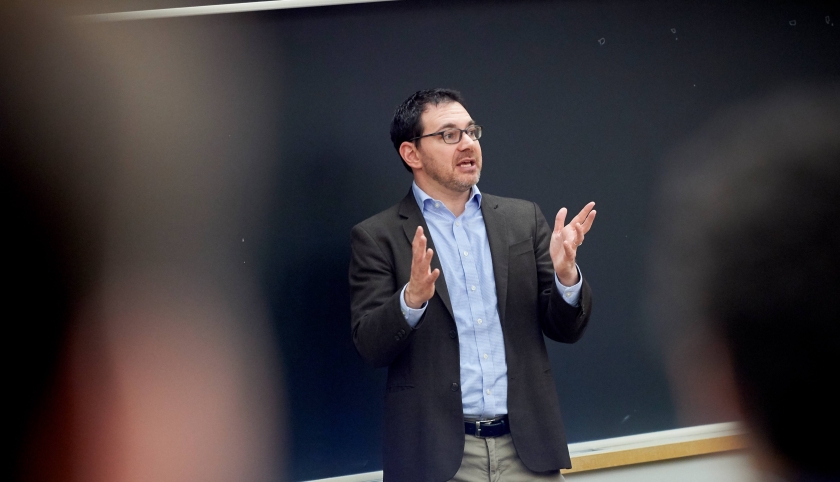
Columbia Law School’s Center for Constitutional Governance (CCG) has a deliberately broad mission: to provide a forum for thinking about constitutional and administrative law. In doing so, the center brings together the Law School’s public law faculty, academics from other Columbia schools and departments, government officials, and students for programming, research, and problem-solving in areas such as constitutional democracy, the rule of law, and the administrative state.
The center was the brainchild of Columbia Law Professor Henry P. Monaghan (1934–2025), a scholarly giant in the fields of constitutional law and federal courts, and was co-founded at his urging in 2012 by Gillian Metzger ’96, Harlan Fiske Stone Professor of Constitutional Law. Its four current co-directors and 15 affiliated Columbia Law faculty are renowned public law scholars with expertise in areas ranging from administrative law, constitutional law, and federalism to criminal justice, family law, financial regulation, and legal history. Metzger continues to serve as a co-director along with Kate Andrias, Patricia D. and R. Paul Yetter Professor of Law; Jessica Bulman-Pozen, Betts Professor of Law; and Olatunde Johnson, Ruth Bader Ginsburg ’59 Professor of Law.
The center aims to be expansive and interdisciplinary. “We’ve done a lot more on democracy and the administrative state than public law programs generally do by default, where sometimes [the work is] all focused on courts,” says Johnson. “We think a lot about agencies and also about the other spaces where democracy thrives or doesn’t thrive.”
“This is a particularly important moment for the center,” says Andrias. “Democracy is under threat. And so to the extent it can be, the center is a focal point for bringing together expertise that exists within the Law School, for bringing in expertise from outside, and for engaging students in a serious, rigorous, academic way on issues of rule of law and shoring up democracy.”
Academic Explorations
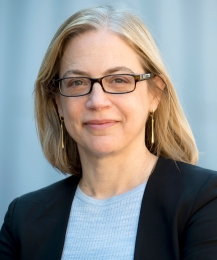
From its inception, the center has supported faculty at Columbia—both those focused on public law and those more broadly interested in constitutional governance. “Whenever a faculty member has something that they want to do or somebody they want to bring here for a talk, we try to organize something to support them,” says Metzger. Each year, CCG hosts a range of events—from lunchtime discussions to daylong conferences—that explore timely topics. “We try to bring together faculty once a year to brainstorm center events,” says Andrias. “Anyone in the faculty can use the resources of the center to put forth constitutional governance programming. And we’ve also tried to highlight alumni who are working in the space.” The center also actively seeks out opportunities to collaborate with other research centers, institutions, and student organizations at Columbia.
Recent programs represent a breadth of subject matters: health care, civil rights, immigration, financial regulation, national security, and executive power. Following the 2024 election, CCG co-sponsored an election talk back lunchtime discussion with the Columbia Law chapter of If/When/How: Law Students for Reproductive Justice; Johnson and CCG-affiliated faculty member Clare Huntington ’96, Barbara Aronstein Black Professor of Law, discussed the election’s results, immediate implications, and broader impact on policy and society. In fall 2025, the center sponsored two book talks: one with Andrias and Yale Law School Professor Justin Driver about his book The Fall of Affirmative Action: Race, the Supreme Court, and the Future of Higher Education, and another with Bernard E. Harcourt, Corliss Lamont Professor of Law and Civil Liberties, and Yale Law School Professor Judith Resnik about her book Impermissible Punishments: How Prison Became a Problem for Democracy.
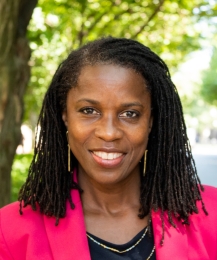
In addition to hosting conferences and events, the center focuses on the academic experience. “I think it heartens students to know that these conversations are had here,” says Johnson. “The question I generally get asked is, ‘How can I be involved?’ and I say they can reach out to any of us to find out how to get involved in our research and our work.” The center also provides more formal opportunities for learning, including by developing courses and workshop series focused on constitutional governance. “The workshops are especially useful for students who might go into academia because they have the opportunity to understand what academic scholarship is about,” says Andrias. “For faculty, workshops expand our knowledge and better equip us to think critically about specific issues.”
For example, in spring 2025, Associate Professor of Law Thomas P. Schmidt, a CCG affiliate, led the center’s Judges Bill Seminar (an idea that grew out of one of the center’s brainstorming sessions). The workshop-style course, open to Columbia Law students enrolled in the Special Topics in Federal Courts seminar and Columbia faculty members, commemorated the 100th anniversary of the Judges Bill—which gave the Supreme Court discretion to control most of its docket—and explored how discretionary jurisdiction has shaped the Supreme Court’s present role in the constitutional order.
Co-director Collaborations
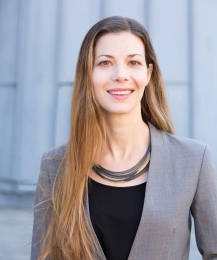
While the co-directors have overlapping areas of expertise, their work through CCG engenders even more intellectual cross-pollination and collaboration: They often cite each other’s law review articles in their scholarship and sometimes write articles together. When Bulman-Pozen and Metzger were teaching a CCG workshop devoted to democracy several years ago, it led to their writing “The President and the States: Patterns of Contestation and Collaboration under Obama” for The Journal of Federalism. Bulman-Pozen and Johnson co-wrote “Federalism and Equal Citizenship: The Constitutional Case for D.C. Statehood” for The Georgetown Law Journal.
The four co-directors also find that there is no shortage of constitutional governance issues with which to grapple—no matter who is in the White House. “The themes we work on were very relevant during the Biden presidency, but [we are now in] a particularly acute period,” says Metzger. “Whether or not we are in a ‘constitutional crisis,’ we are in a situation of serious illegality and unlawful behavior by the executive branch of the United States.”
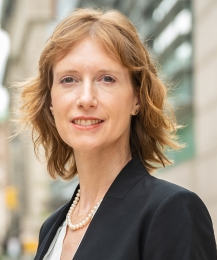
“Both faculty and students are interested in thinking about how we solve some of the underlying problems with our system of constitutional governance—problems that enabled the current threats,” says Andrias. “While exploring the present moment, the center is also focused on what comes next: the future of constitutional governance.”
As to a course of action the center should take, “we continue to figure that out,” says Metzger, adding that it will likely involve a combination of brief writing, scholarship, and, of course, teaching: This fall, Metzger and Andrias led a Public Law Workshop, Democracy, Authoritarianism, and Constitutional Governance, which provides students insight into current public law scholarship through presentations of working papers by leading scholars. In spring 2026, Metzger and Lecturer in Law Donald B. Verrilli ’83, the former U.S. solicitor general under President Barack Obama, will teach the Perspectives on the Presidency seminar as part of the Public Law Workshop series.
No matter the focus of their efforts, the co-directors are scholarly soulmates, fortified by their work with the center. “We spend more time together because of the center, which means we talk about all sorts of things, incubating and reacting to each other’s emerging ideas,” says Johnson. “You get exposed to scholarship in different areas, and so I’ve written about things that I never would have thought that I could write about.” Indicating her co-directors, she adds: “I learn a lot from them.”