Preparing for a Transformative Experience: Columbia Law School’s Weil, Gotshal & Manges Judicial Clerkship Training Institute
Judges, faculty members, practicing attorneys, and alumni counseled future clerks at the second annual daylong boot camp.
Among the 18 speakers at Columbia Law School’s Weil, Gotshal & Manges Judicial Clerkship Training Institute, the verdict was unanimous: A judicial clerkship is a privilege and an unparalleled opportunity for lawyers in the early years of their careers to play an indispensable role in ensuring the administration of justice within federal and state systems.
The institute’s six sessions, held in Jerome L. Greene Hall on May 21 and followed by a reception in the Li Lu Law Library, explored how judges work with their clerks, how clerks can best support judges, and how to transition to practice after completing a clerkship.
“The institute is designed to prepare Columbia students and alumni to navigate the clerkship life cycle and thrive in chambers beginning on their very first day,” said Daniel Abebe, Dean and Lucy G. Moses Professor of Law, in welcome remarks at the event. “Since becoming Dean nearly two years ago, one of my top priorities has been building upon Columbia Law’s stellar clerkship legacy. We’ve focused on expanding the concrete support we offer our students, and this premier training series is a cornerstone of those efforts.”
Organized by the Office of Judicial Careers, the event is part of the Law School’s long-standing and comprehensive programming to support students and alumni pursuing clerkships. Through advising, placement, and processing services, the office assists Columbia Law graduates in securing postgraduate judicial clerkships with jurists across the country. This year, for example, three alumni will clerk for U.S. Supreme Court justices during the October Term 2026; 125 alumni are beginning clerkships in state and federal courts in 2026; and the graduating Class of 2026 has secured 73 clerkships and continues to interview for additional positions.
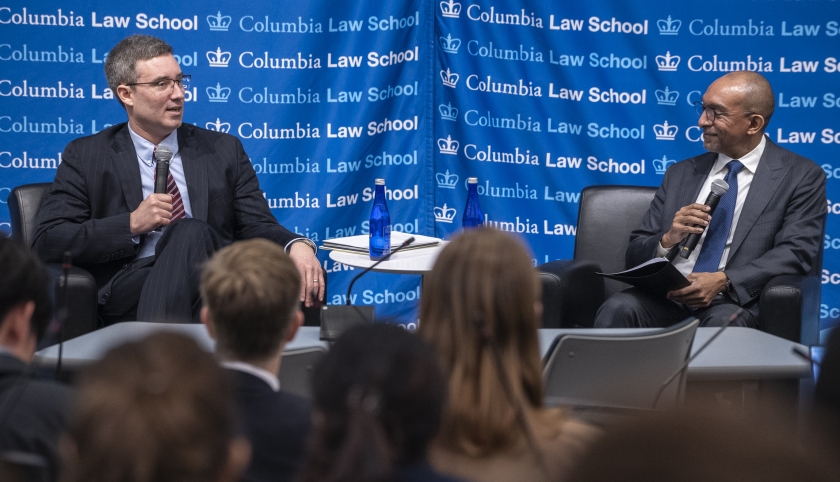
The 2026 institute began with a fireside chat between Dean Abebe and Judge Joseph F. Bianco ’91 of the U.S. Court of Appeals for the 2nd Circuit, who called clerking “a transformative experience.”
Bianco mentors his own clerks every year. It's a role he well understands, having himself clerked for Judge Peter K. Leisure of the U.S. District Court for the Southern District of New York following his graduation from Columbia Law. At the time, Bianco said, he saw clerking as a path to becoming a prosecutor—a role he became interested in after taking a criminal law course taught by Judge Gerard E. Lynch ’75, Paul J. Kellner Professor Emeritus of Law, during his 1L year.
“I really just can’t say enough about what [clerking] did for my life,” Bianco said. “I had this idea that I wanted to be a prosecutor, but for a year, I was watching the prosecutors … just absorbing what they were saying, how they tried cases, sentencing, pleas.” He said the experience of clerking also took his research and writing skills to “a whole other level.”
After completing his clerkship, and between a few brief stints in private practice, Bianco served as an assistant U.S. attorney in the Southern District of New York and as a deputy assistant attorney general in the Criminal Division of the Department of Justice until his appointment to the bench.
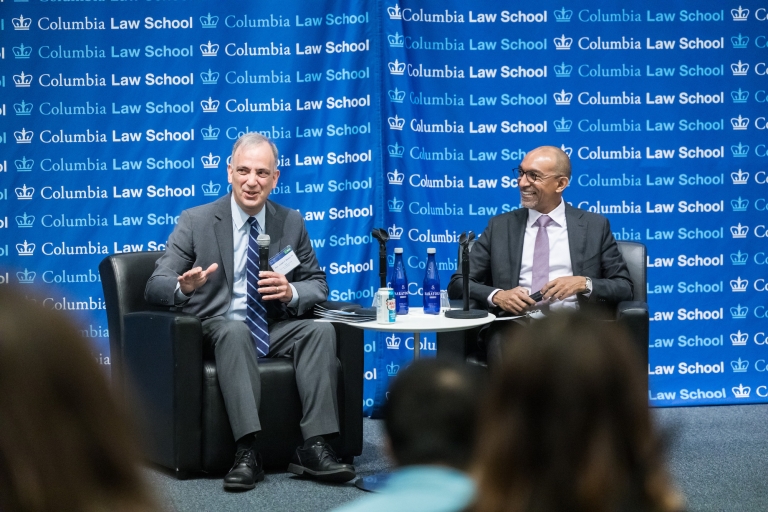
Panels following the fireside chat focused on clerkship fundamentals and included a session on clerkship writing essentials led by Dennis Fan ’15, associate clinical professor of law and director of the Appellate Litigation Clinic. Discussions throughout the day centered on issues of professional responsibility with an emphasis on confidentiality, impartiality, and other ethical concerns—including a panel on “Anticipating Ethical Issues” led by Judge John P. Mastando III CC ’93, LAW ’96 of the U.S. Bankruptcy Court for the Southern District of New York. (For more on the panels and participants, see below.)
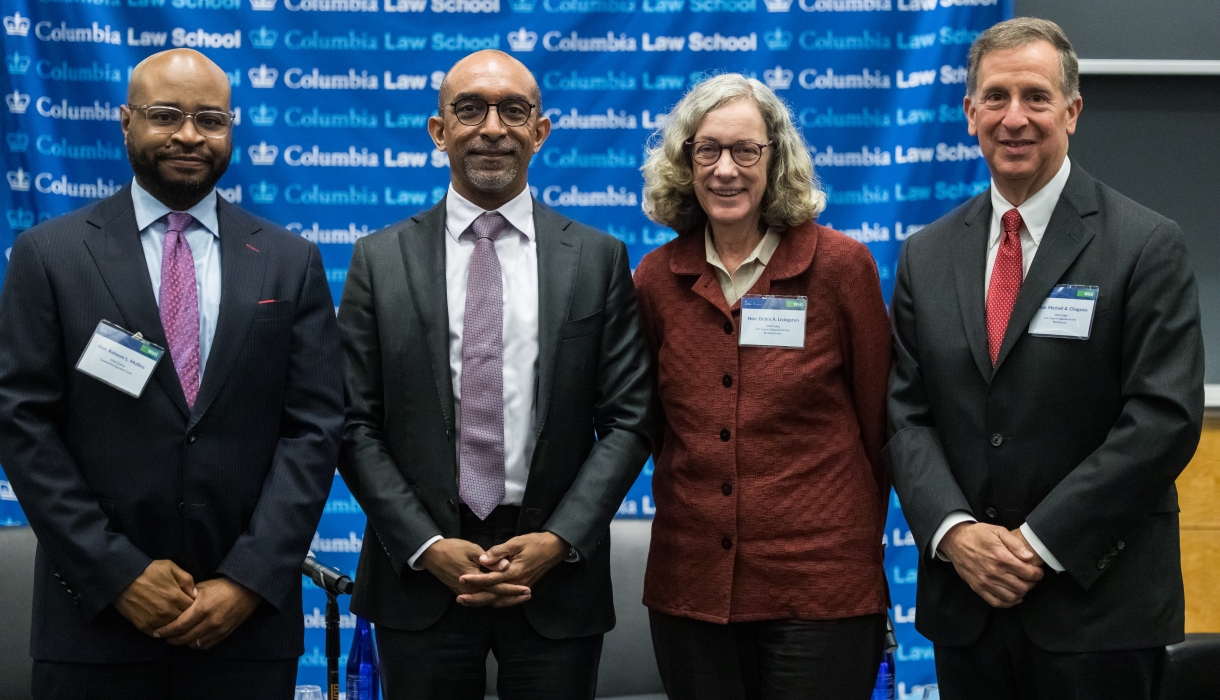
Dean Abebe also moderated the final panel, “An Unofficial Handbook for Excelling as a Clerk,” with Chief Judge Michael A. Chagares of the U.S. Court of Appeals for the 3rd Circuit, Chief Judge Debra A. Livingston of the U.S. Court of Appeals for the 2nd Circuit, and Chief Justice Raheem L. Mullins of the Connecticut Supreme Court.
Livingston, who is also Paul J. Kellner Professor of Law and teaches Criminal Investigations at the Law School, said she expects her clerks to take ownership of the cases she assigns to them and to work expeditiously with her to get a speedy disposition for the concerned parties. And when she asks a clerk to write a draft opinion, she wants them to produce an opinion that doesn’t read like a draft.
“Don’t set the bar low for yourself. Your aspiration should be to write drafts that are ready to be turned in,” she advised the audience. “If you’re that kind of writer, you will make it onto those cases that go to court, you will be on the trial team, you will be at the appellate argument because every trial team needs a writer who will deliver a finished product. So aspire to be that writer, and you’ll have a great clerkship and a great career.”
About the Sessions
“Fireside Chat”
Dean Daniel Abebe and Judge Joseph F. Bianco ’91 of the U.S. Court of Appeals for the 2nd Circuit
“Clerkship Fundamentals: Hit the Ground Running”
Dianisbeth Acquie, director of the Office of Judicial Careers, and Anne E. Green, senior judicial careers advisor in the Office of Judicial Careers
“From Classroom to Chambers: Clerkship Writing Essentials”
Dennis Fan ’15, associate clinical professor of law and director of the Appellate Litigation Clinic
“The Post Clerkship Transition”
Moderated by Petal Modeste, associate dean for professional affairs administration, with panelists Cristina Alvarez ’18, senior associate at Bloch & White; Freya Jamison ’21, counsel for Lawyers’ Committee for Civil Rights Under Law; Robert B. Niles-Weed, partner at Weil, Gotshal & Manges; and William Wilder ’20, associate at Perkins Coie
“Anticipating Ethical Issues”
Moderated by Judge John P. Mastando III CC ’93, LAW ’96 of the U.S. Bankruptcy Court for the Southern District of New York with panelists Judge Vernon S. Broderick of the U.S. District Court for the Southern District of New York, Judge Peggy Cross-Goldenberg ’01 of the U.S. District Court for the Eastern District of New York, Judge Cari Fais ’08 of the U.S. District Court for the District of New Jersey, and Judge Beryl A. Howell ’83 of the U.S. District Court for the District of Columbia
“Chief Judge Panel: An Unofficial Handbook for Excelling as a Clerk”
Moderated by Dean Abebe with panelists Chief Judge Michael A. Chagares of the U.S. Court of Appeals for the 3rd Circuit, Chief Judge Debra A. Livingston of the U.S. Court of Appeals for the 2nd Circuit, and Chief Justice Raheem L. Mullins of the Connecticut Supreme Court