The Year in Alumni Books 2025

From public policy to fantasy fiction, Columbia Law graduates published books on a variety of topics this year.
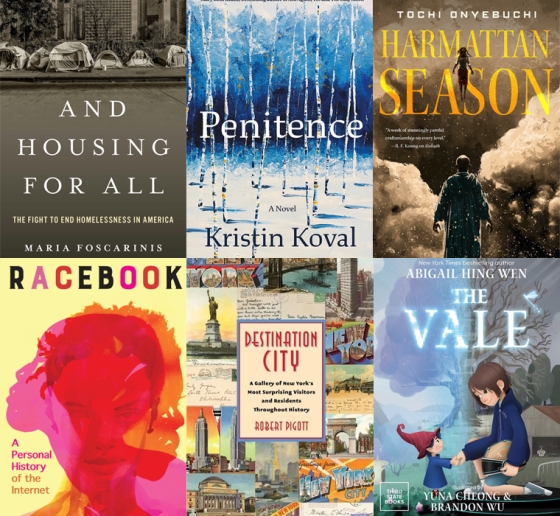
Grid of six book covers by Columbia Law alumni

A literary thriller, a collection of personal essays, and a work of futuristic fiction are among the books published by Columbia Law School alumni authors in 2025. See a selection below.


Book Cover of And Housing for All featuring an image of a row of tents pitched on a sidewalk.

Maria Foscarinis ’81

And Housing for All: The Fight to End Homelessness in America 
Prometheus Books, June 2025

The founder of the National Homelessness Law Center, Maria Foscarinis, addresses the human toll of homelessness on individuals and families and how flawed policies have perpetuated the housing crisis in And Housing for All. A longtime lecturer at the Law School who teaches the Homelessness Law and Policy seminar, Foscarinis weaves together personal stories with policy analysis, explaining why past efforts to alleviate homelessness have failed and what must change to achieve lasting solutions to a human rights crisis.

Book cover for "The Vale"

Abigail Hing Wen ’04

The Vale
Third State Books, September 2025

The latest novel by Abigail Hing Wen—the New York Times bestselling author and executive producer of the film version of her book Loveboat,Taipei—is the story of 13-year-old Bran Joseph Lee, who spent much of his life building an immersive AI-generated environment using technology created by his inventor parents. He prefers this virtual reality world to his real life until things begin to go seriously wrong—but mysteriously, none of it is of his own doing. Can he uncover the truth before both of his worlds are destroyed?

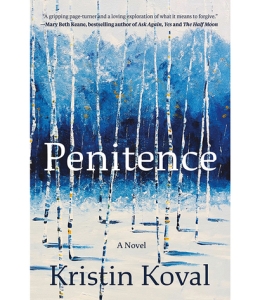
"Pentience" book cover

Kristin Koval ’96

Penitence
Celadon Books, January 2025

Kristin Koval’s debut novel—one of Apple Books’ Best Debuts of 2025—is a literary thriller that begins with a shocking murder and features a small-town lawyer and her son, a New York criminal defense attorney. Spanning decades, the action moves back and forth from the ski slopes of Colorado to the streets of New York City in the years before the terrorist attacks of September 11, 2001. The book challenges readers to consider whether people should be defined by the worst thing they have ever done and touches on the concepts of family loyalty, redemption, and forgiveness.

Two covers of books by Tochi Onyebuchi ’15

Tochi Onyebuchi ’15

Harmattan Season
Macmillan, May 2025

Racebook: A Personal History of the Internet
Grove Atlantic, October 2025

Tochi Onyebuchi published both fiction and nonfiction books this year. Harmattan Season—which takes its name from the winter months when a dry, dusty wind blows from the Sahara Desert to the coast of West Africa—is fantasy fiction incorporating African lore and the noir sensibilities of Raymond Chandler and Dashiell Hammett. In Racebook, a collection of personal essays, Oneybuchi traces his online persona back to the internet of the late 1990s and early 2000s. He explores how identity and race are forged by being online, and he examines how internet culture shapes our perceptions of ourselves, our world, and the potential realities we can envision.

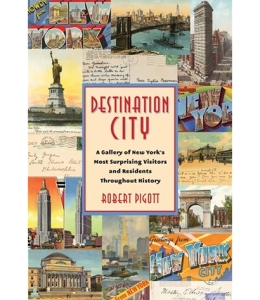
Book cover of "Destination City"

Robert Pigott ’86

Destination City: A Gallery of New York’s Most Surprising Visitors and Residents Throughout History
Columbia University Press, April 2025

A lifelong New Yorker who is general counsel for a nonprofit that develops affordable housing, Robert Pigott has written a book that is chockablock with tales about dozens of historical figures who had seminal experiences while residing in New York but who are not generally considered New Yorkers..whowho are not usually associated with New York City but who spent key parts of their lives there. Among those included: Charles Dickens, who stayed at the Carlton House hotel on Broadway in 1842; Leon Trotsky, who lived in the Bronx when the Russian Revolution began; Jimmy Stewart and Henry Fonda, who shared an apartment in the 1930s that was nicknamed “Casa Gangrene”; and Simone de Beauvoir, who smoked her first joint at the Plaza Hotel.