
How I Got Here: Laura Yvonne Zielinski ’14 LL.M.
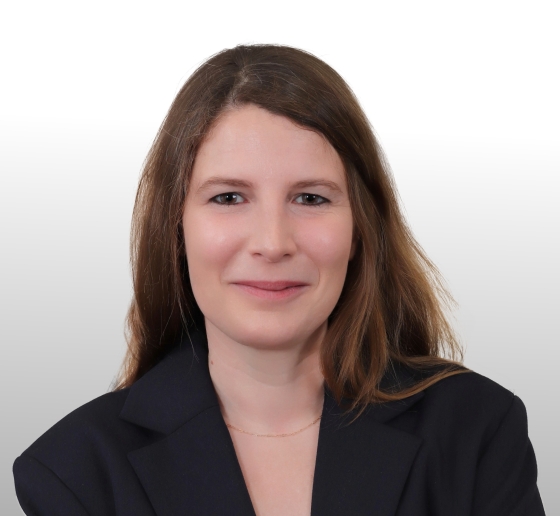
Laura Yvonne Zielinski ’14 LL.M. is an associated partner at Noerr in Frankfurt, Germany, specializing in international arbitration and foreign investment protection. She is also co-founder and president of the Space Arbitration Association.
What exactly do you do?
I specialize in international investment arbitration. Those are cases that arise from disputes between a company and a government related to long-term investments in foreign countries. Let’s say a company invests abroad to build an airport, and the project relies on the fact that for a specific number of years, the company will receive income through leasing out the structure. And then halfway through the project, the government of the country where the airport is being built takes away the company’s license to build the airport. But the company has already invested a lot of money in the project, plus it loses all the projected income it was supposed to receive. Many governments sign contracts with other governments to mutually protect their foreign investors. For example, there’s an international treaty between France and Mexico, so if French investors go to Mexico and invest, and Mexico harms these investments, then the French investors have the right to go to arbitration based on that treaty. And that is where I come in.
What do you enjoy about your work?
I like arbitration because there can be disputes in different industry sectors or projects. You’re always learning about new industries, and you learn a lot about the world economy. I also like the international aspect of it. I’ve always been very interested in geopolitics, and investment arbitration is kind of a combination of geopolitics and law.
A lot of people love arbitration because going before an arbitration tribunal is kind of like going to court and pleading and doing cross-examinations, but that’s not something that I love about it. I prefer reading to pleading! I like the political context and understanding the argument better than I like the oral phase of the proceedings before the tribunal.
What skills helped you navigate—and succeed in—the international arbitration field?
Speaking four languages helps. But I don’t think this is as important today as it used to be because of AI—and increasingly, these cases are handled by local law firms and lawyers who can work in the language of the case in any event. What is important and what international arbitration clients will continue to pay for is judgment. And I think that’s something you develop by being exposed to many different things. It’s something that’s difficult to learn if you are just sitting in a library. You need to interact with many people, travel, get to know different parts of the world so that you know how to judge different situations. It’s one thing to be a very good lawyer, but it’s another thing to understand the cultural and business context in which the investors and the states operate. A lot of issues arise out of misunderstandings that are not done in bad faith on either side. There’s just a lack of awareness that things don’t necessarily mean the same thing in every culture.
In 2021, you founded the Space Arbitration Association. How did your practice area develop to include space law as a specialty, and why did you start the association?
Beginning in 2018, I worked for several years on an investment case in the space sector, an arbitration case brought by a French satellite company against the government of Mexico. Based on this experience, I decided to deepen my knowledge of space law during the pandemic, when I had a lot of free time. I took an executive course at McGill University on strategic space law, and the professors gave reading lists for those of us who wanted to go deeper, so I read everything. And I noticed that there’s quite a lot of arbitration in the space sector. Arbitration is the go-to choice for space companies to resolve legal disputes, but there were no real arbitration practitioners specializing in the area. So I founded the Space Arbitration Association in 2021 to create exchange between the international arbitration and space communities and try to find the best ways of avoiding and solving space law disputes. The association also offers training on international arbitration to the legal teams of companies that are active in the space sector. The association has become much more popular than I thought it would be! I started getting invited to speak at conferences, and I had to dive deeper into my research to have interesting things to say. That’s when I decided to get my doctorate at the University of Cologne, which has a specialized institute for international space law.
What are some of the big issues in space law currently?
International space treaties date back to the 1960s and 1970s, drafted before the commercial space economy took off. Now that there are so many new commercial actors going into space, there are issues that are just not covered by those treaties. The most pressing one is that there’s no space traffic management system. Increasingly, collision warnings come to the satellite operators, but there’s no system in place for what to do when they get a warning. Sometimes, one company flies collision-avoidance maneuvers without knowing if the other satellite company also received the same warning and might try to avoid the collision by diverting in the same new direction. In the worst case, this lack of a standard system can render collisions more likely.
Another big issue concerns the moon. Under international space law, it is prohibited to appropriate any part of outer space, including celestial bodies. There are now two competing projects, one led by the United States, one led by China, to build a permanent settlement on the moon. The question will be when or to what extent these settlements constitute appropriation. Whoever gets to establish a so-called safety zone around a lunar base first could face claims by the other one under international law.
You earned your LL.M. from Columbia Law in 2014. Looking back, what about that experience was important to you, both professionally and personally?
One of the most valuable classes I took at Columbia Law was the Negotiation Workshop. It teaches you how to think like a lawyer, but also to see how other people think. But beyond that, I can really say without any exaggeration that the LL.M. changed my life. I had very close Mexican friends during that year. We stayed in touch, and when I wanted to move from Paris, where I was living, they said, “We have an extra room; come spend the summer in Mexico.” I went and ended up staying almost eight years in Mexico, I met my husband there, and now a big part of my life is in Mexico. The Columbia Law School LL.M. program attracts so many different nationalities and, obviously, also interesting and intelligent people from these different countries. The real value comes from being exposed to different worlds. It’s a very enriching experience.
This interview has been edited and condensed.
