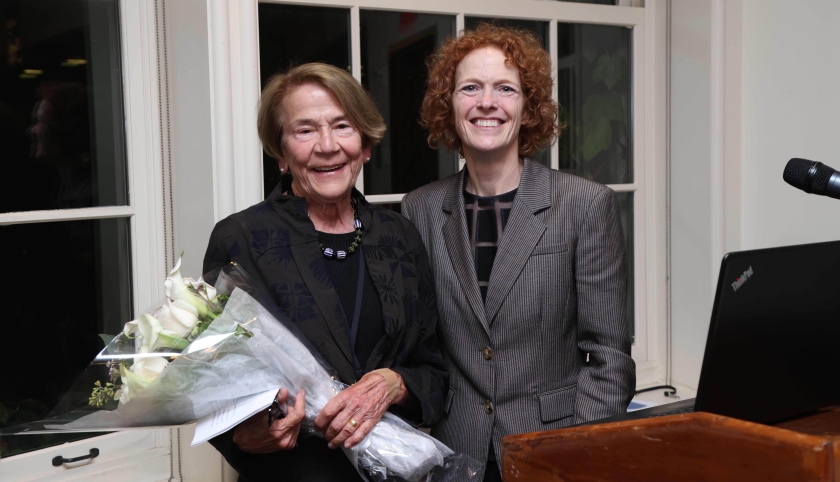
Elizabeth Scott Elected to the American Academy of Arts and Sciences
Scott is one of 252 members—drawn from academia, the arts, industry, policy, research, and science—elected in 2026.
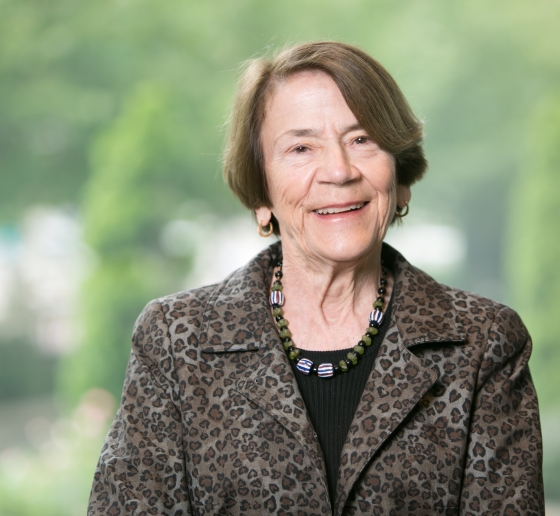
Elizabeth Scott, Harold R. Medina Professor of Law, Emerita, has been elected as a member of the American Academy of Arts and Sciences, one of the nation’s most prestigious honorary societies and a leading center for independent policy research.
Scott joined Columbia Law School in 2006. A leading authority on juvenile justice, she has written extensively on juvenile crime and delinquency; adolescent decision-making; and marriage, divorce, cohabitation, and child custody. She is known for pioneering the inclusion of a developmental framework for juvenile justice, and her work has led to new ways of thinking about children and the legal system.
“We celebrate the achievement of each new member and the collective breadth and depth of their excellence—this is a fitting commemoration of the nation’s 250th anniversary,” said Laurie Patton, president of the academy, when announcing this year’s members. “The founding of the nation and the academy are rooted in the inextricable links between a vibrant democracy, the free pursuit of knowledge, and the expansion of the public good.”
Scott takes an interdisciplinary approach in her research, applying behavioral economics, social science research, and developmental theory to family and juvenile law and policy issues. Her 2003 article, “Less Guilty by Reason of Adolescence: Developmental Immaturity, Diminished Responsibility and the Juvenile Death Penalty,” written with psychologist Laurence Steinberg, was cited in the 2005 landmark Supreme Court decision Roper v. Simmons, where the court found the death penalty unconstitutional for crimes committed by minors. The work was later cited in the court’s Eighth Amendment opinions striking down harsh sentences for juveniles, and it led to changes in state-level juvenile justice systems around the country.
In 2008, she and Steinberg published Rethinking Juvenile Justice. The award-winning book outlined “a new developmental model of juvenile justice that recognizes adolescents’ immaturity but also holds them accountable.”
From 2015 to 2024, Scott served as the chief reporter for the American Law Institute’s Restatement on Children and the Law, a continuation of her decades of work to codify and clarify U.S. law and shape the way lawyers, courts, and lawmakers think about children’s rights; the restatement was approved by the American Law Institute in 2024.
“The law’s treatment of children has become very complex over the past several decades and has been in need of clarification,” Scott said. “The challenge we faced … was to find coherence in this evolving area of law and to capture beneficial law reform.”
Scott earned a J.D. from University of Virginia School of Law, where she later served as a professor and founded the interdisciplinary Center for Children, Families, and the Law.
Other Columbia Law professors who are active members of the academy include: Vincent Blasi, Philip C. Bobbitt, John C. Coffee Jr., Kimberlé W. Crenshaw, George P. Fletcher, Jane C. Ginsburg, Michael Graetz, Philip Hamburger, Gillian Lester, Lance Liebman, Thomas W. Merrill, Gillian Metzger ’96, Robert Scott, Peter L. Strauss, Eric Talley, and Tim Wu.