Rolando Acosta ’82 Delivers Keynote at 11th Annual Alumni of Color Reception
In his remarks, Dean Daniel Abebe called the retired New York State Supreme Court justice “a vocal advocate for judicial independence and democracy.”
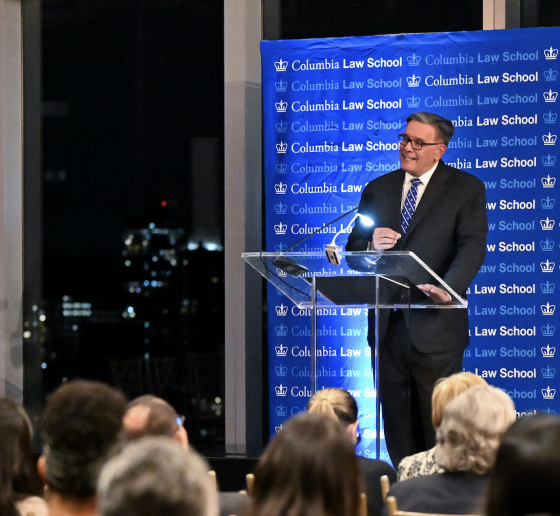
When Rolando T. Acosta CC ’79, LAW ’82 spoke at this year’s Alumni of Color Reception, he began by explaining why he retired early from “the best job in the world” as the presiding justice of the New York State Supreme Court, Appellate Division, First Department. The reason, he said, was that he wanted to be able “to speak more boldly and candidly about the importance of the rule of law and an independent judiciary” than the Code of Judicial Conduct allows.
Acosta, who received the Law School’s Medal for Excellence in 2024, is a Columbia University trustee emeritus and a member of the Law School’s Dean’s Council. Widely known as an innovative and community-minded trial and appellate judge who modernized court practices and pushed through reforms before he retired from the court in 2023, he is now a partner at Pillsbury Winthrop Shaw Pittman.
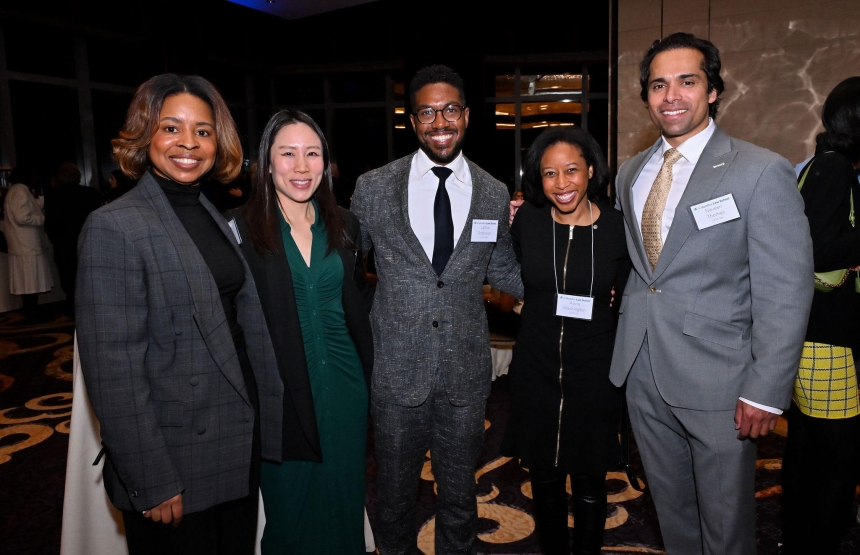
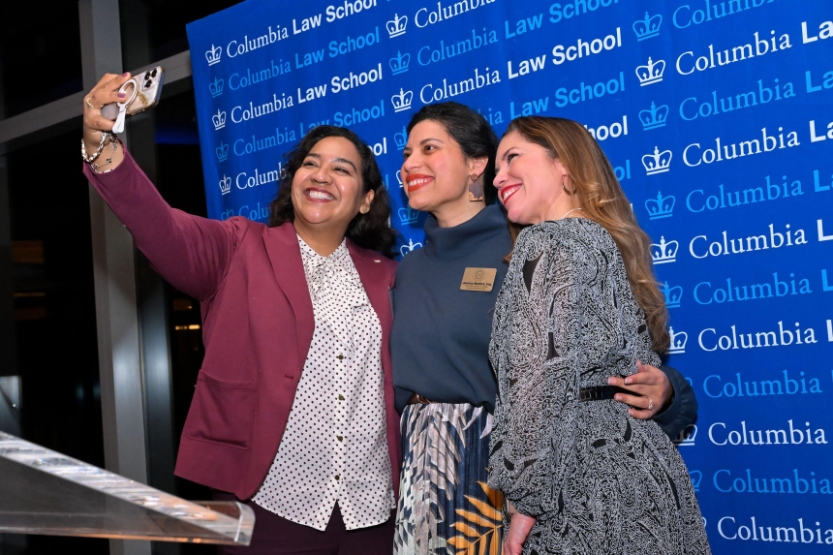
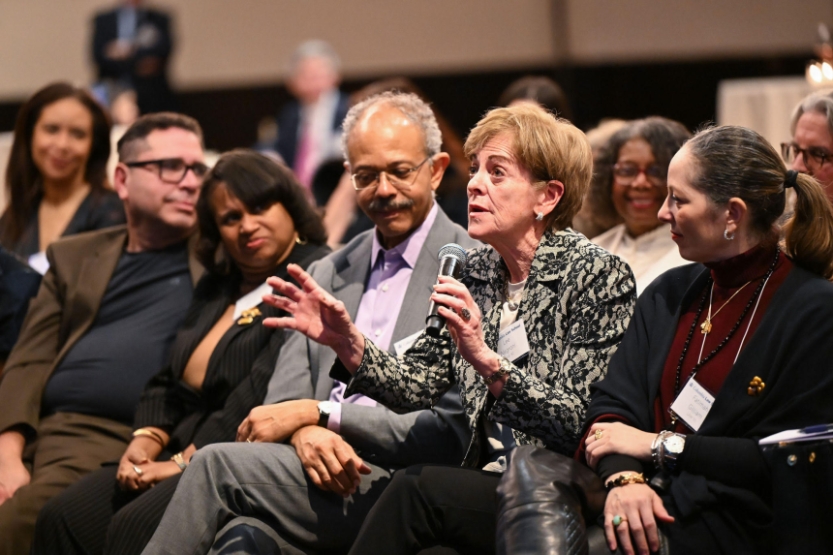
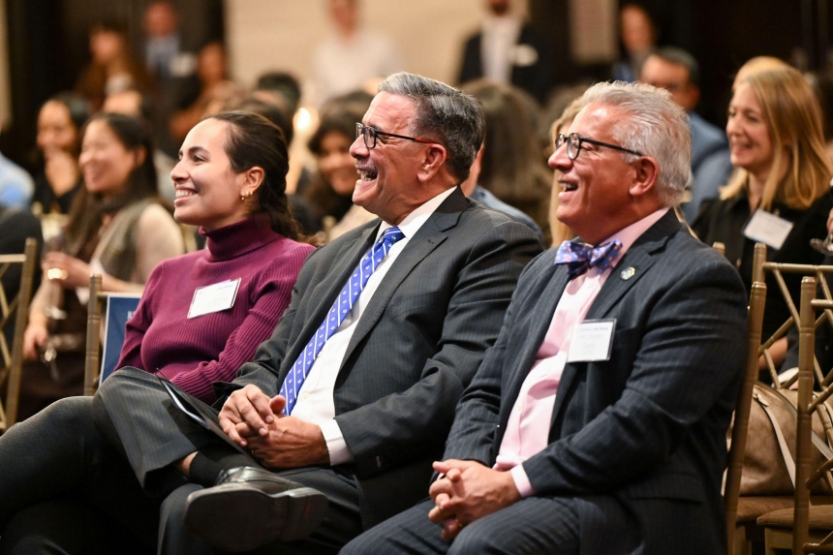
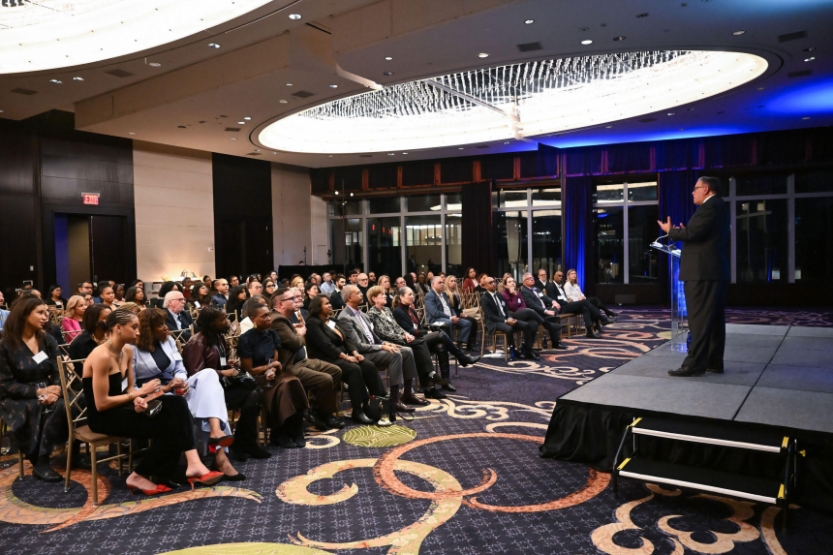
The 2026 Alumni of Color Reception marked the 11th anniversary of the event, which was held at the Mandarin Oriental, New York, on January 21. More than 130 alumni gathered to reconnect, network, and honor Acosta.
‘The Very Best of Columbia’
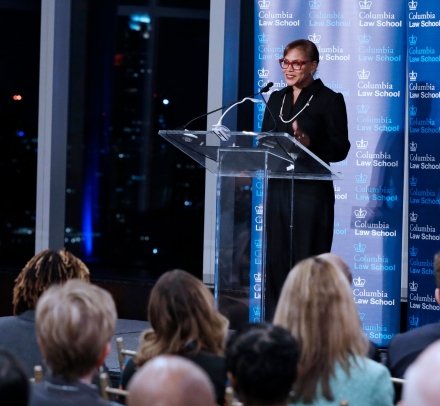
In his opening remarks, Daniel Abebe, Dean and Lucy G. Moses Professor of Law, thanked the attendees for being examples of “the very best of Columbia,” adding that “all of you here embody excellence. You reflect the richness, diversity, and aspirations of our great law school, and … are deeply committed to the enduring values that mark a Columbia Law education.”
He emphasized the important role Law School events play in building community. “It’s through gatherings like this reception that we will strengthen our personal and professional networks, that we’ll build relationships that span geography and generations, and we’ll ensure that students and young alumni can see a path for themselves that encompasses the widest range of opportunities,” he said.
The Dean also took the opportunity to share his vision for the Law School’s future, which follows a year spent listening and learning from the community. “We’re going to build on our deep commitments to academic excellence, to open and free expression, to innovation in scholarship and teaching, while also standing up to meet the challenges of the moment,” he said. “One of the key pillars of that vision is something that I’ve been calling institutional vitality and community flourishing. In addition to providing an outstanding educational experience for our students, Columbia Law School must embrace a pastoral role, one that fosters a deep sense of community and belonging among students, faculty, staff, and, importantly, among all of you, our alumni.”
‘A Vocal Advocate for Democracy’
Introducing the evening’s keynote, Dean Abebe said that over Acosta’s four-decade career, “he has distinguished himself as an exemplary jurist, public servant, community leader, and university citizen.” Furthermore, the Dean called Acosta “a vocal advocate for judicial independence and democracy, speaking out against partisan divisiveness and the erosion of fundamental norms.”
Acosta centered his remarks on what he called the “peril” the Constitution is under, fueled “by a persistent disregard of basic facts and the truth, and a loss of respect … for fundamental values and the rule of law, all of which,” he said, “are necessary to uphold our Constitution and democratic system.” He called the Constitution, and adherence to it, “the only port in this storm.”
Noting that the Constitution was adopted more than 230 years ago, he marveled that it has “not only remained the bulwark of our democracy but has expanded rights to so many who either were not considered or were dismissed by the founders.” He reflected on many advancements facilitated by the Constitution’s adaptability. “Without the Constitution and its amendments and ongoing interpretation by the judiciary, segregation in schools would be legal, same-sex couples and interracial couples would not have the right to marry, and voting rights for women and people of color could be rendered nonexistent,” he said.
Acosta’s feelings about the Constitution have been informed by his experiences growing up in the Dominican Republic under a dictatorship. “My father was regularly arrested under the [Rafael] Trujillo dictatorship simply for disseminating information,” he said. Acosta immigrated to the United States with his family when he was 14.
Describing himself as an optimist, Acosta encouraged his fellow lawyers—whom he called “guardians of the public good”—to defend the Constitution “through civic education, safeguarding our elections, supporting civil institutions, and otherwise embracing service,” he said. “We must not allow our democracy to be undermined by cynical factions and actors who substitute partisan politics for constitutional process, simply to advance their own political agendas.”
Acosta concluded by quoting the “Farewell Address” of President George Washington, who cautioned that modifications to the Constitution must be made according to the Constitution itself: “‘Let there be no change by usurpation; for though this in one instance may be the instrument of good, it is the customary weapon by which free Governments are destroyed.’”
Funding the Future
Dean Abebe expressed his gratitude to the alumni who helped raise $1 million for the Eric Holder, Jr. Scholarship Fund (named for the former U.S. attorney general who graduated from the Law School in 1976) and $340,000 so far toward the Kellis Parker Portrait Fund, to honor the first Black tenured professor at the Law School. Any funds raised beyond $500,000 will be used to establish a teaching fellowship in Parker’s name. “Thank you for continuing to support the Law School and for continuing to support one another,” the Dean said. “You are making a difference for the future.”