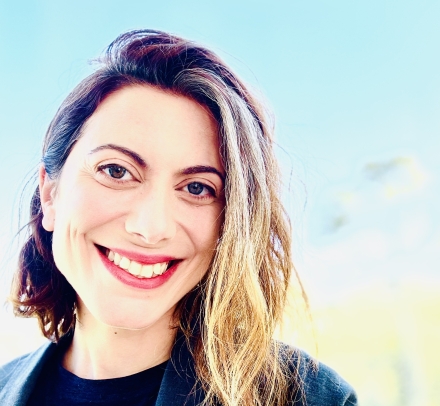
How I Got Here: Olena V. Ripnick-O’Farrell ’14
Olena V. Ripnick-O'Farrell ’14 is global copyright counsel at ByteDance, a multinational technology company that develops AI models and operates global platforms, including TikTok, that cut across commerce, content, entertainment, and enterprise.
What exactly do you do?
I counsel at the intersection of copyright and AI, which means I think about novel issues of copyright law day in and day out. It’s my dream job—focusing solely on copyright is what I’ve always wanted to do in my legal career. My role requires agility, and, much like myself, it doesn’t fit neatly into any box. I’m a U.S. copyright law expert with a deep knowledge of EU and U.K. copyright law, and my practice over the past decade has been a tapestry of litigation, product counseling, and commercial transactions. At ByteDance, I blend substantive knowledge with practical experience to support the development of our AI models and advise internal stakeholders on novel and complex issues of copyright law.
I couldn’t think of a role better suited for me. My brain seeks novelty while at the same time craving complexity and deep thinking, and grappling with legal questions for which there are no clear answers and counseling across multiple workstreams brings me joy.
How does your current job differ from your previous roles at Meta (as associate general counsel, IP product) and in private practice (as an IP associate at Debevoise & Plimpton)?
I’m on an all-female team for the first time in my legal career, and my teammates are some of the sharpest attorneys I’ve ever worked with. I’m so proud to be a part of this group. This is also the first time in my career where my practice is focused purely on copyright. It’s rare for an IP attorney to be able to specialize like this, and, like most, my previous practice included trademark and right of publicity. I’m indebted to Jeff Cunard, a former Debevoise partner with whom I remain in touch, for enabling me to develop my copyright practice as an associate. If he hadn’t supported me in doing so, the doors that opened and led me to my current role would have remained firmly shut.
How did you develop your passion for copyright law?
Professor Jane Ginsburg. I fell in love with copyright law on the very first day of her introductory copyright course. Jane is incredibly knowledgeable and passionate about this subject, and she’s so thoughtful in considering these complex issues. After taking this course, I ended up taking every copyright-related course that Columbia Law offered—including Jane’s elective on international copyright law, which remains relevant in my practice today—and I also served as her research assistant.
One of the most exciting things about copyright law is that there aren’t many bright-line rules or clear-cut answers. It’s an evolving space, and the issues I advise on are constantly on my mind, even outside of working hours. Some of my best thinking happens when I’m not at my desk, often on the weekends or when I’m outdoors. To be honest, my passion for this subject probably exceeds what is healthy or typical, but I’m fine with that.
What else were you interested in during law school?
I’ve always been interested in legal issues relating to gender equality and the LGBTQ+ community. During my time at the Law School, I was on the staff of the Columbia Journal of Gender and Law, and I served as the vice president of Columbia OutLaws. I also held internships with Immigration Equality and the ACLU’s LGBTQ & HIV Project.
You were recently named one of the 40 Best LGBTQ+ Lawyers Under 40 by the National LGBTQ+ Bar Association, and you often speak publicly about the intersectionality of your identity as a gay, neurodivergent woman. How do you advocate for these communities in the workplace?
Visibility matters. I’m a queer, neurodivergent woman from a rural town in the Catskills. I’ve never had anyone like me to look up to as I have navigated my legal career. Neurodivergence—along with mental health conditions and other disabilities—remains highly stigmatized in the legal profession. There’s an irony here because many neurodivergent traits, such as hyperfocus under pressure, pattern recognition and issue spotting, rules-based system-oriented thinking, and creative problem solving, are significant strengths in practicing law.
Each day I choose to be open about my identity, knowing the risk that this entails. I want things to be even a little bit less challenging for those who come next, and my advocacy comes in many forms. I exist openly. I educate others about neurodiversity and neuroinclusive best practices. I assist neurodivergent individuals in navigating the ADA [Americans with Disabilities Act] accommodation process, which can be overwhelming for those who struggle with executive function. And I regularly counsel neurodivergent law students and associates navigating the legal profession.
What advice do you have for lawyers who want to work in the tech sector?
First, keep going. Persevere. Ask for feedback, and learn from your mistakes. Grit and a growth mindset are the most important traits you can develop in any profession. Second, your health is your wealth. You must prioritize it over everything else because no one else will. This perspective is critical, and it’s one that I wish I had had earlier on in my career.
This interview has been edited and condensed.